
On the old Grand River trail
Spray Foam Insulation in Williamston, MI
A quarter of homes predate 1950.
- Free in-home estimates with measurements
- Itemized written quote: material, thickness and R-value per area
- Leaks, damp spots and old insulation checked before we cover anything
A Small Town With Old Bones
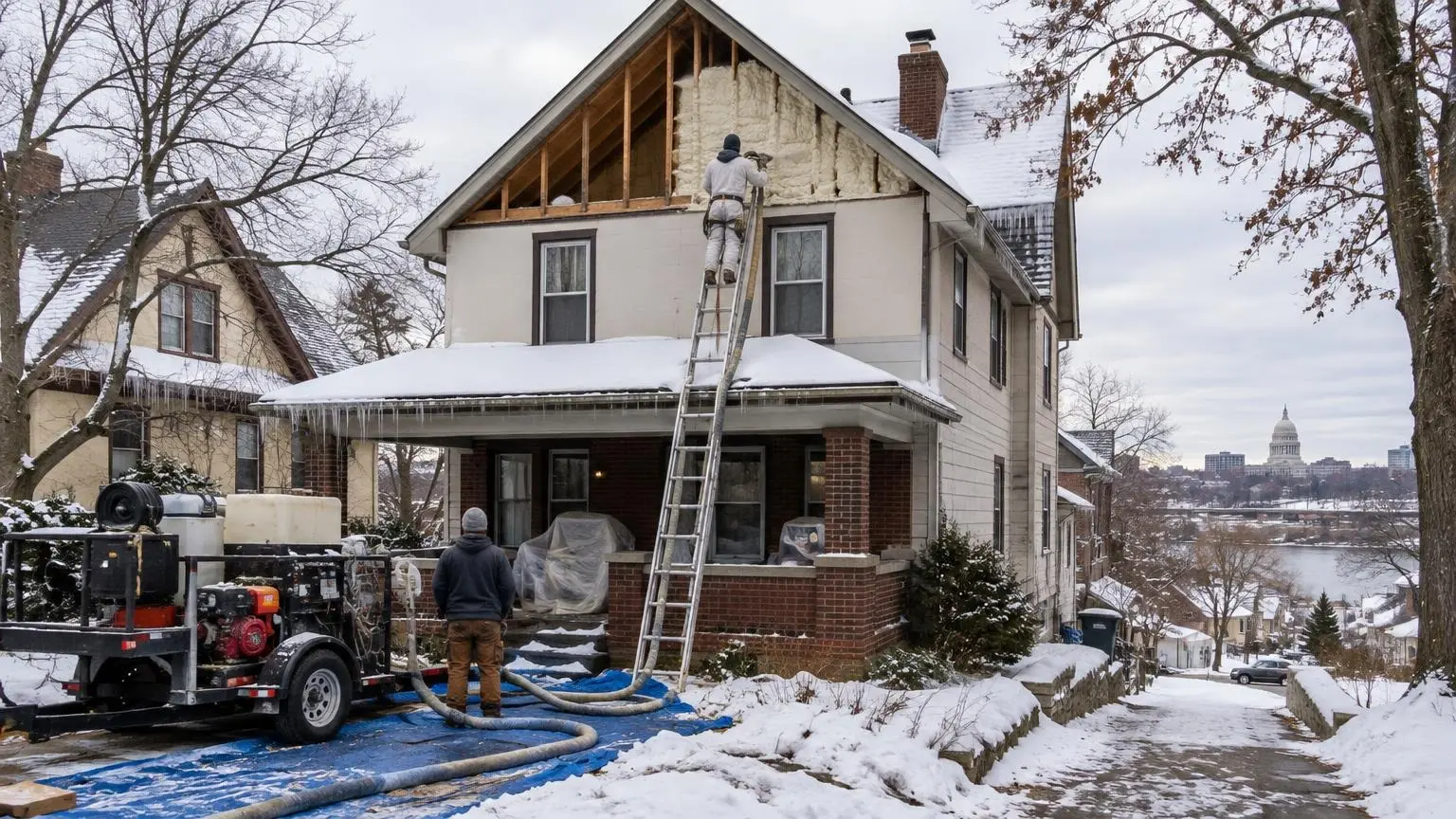
Spray Foam Insulation in Williamston often means older homes near downtown. About 17% of the city's housing dates from 1939 or earlier, and another 8% was built in the 1940s. Williamston was platted in 1845 on the Red Cedar River, along the old Grand River trail that is now Grand River Avenue, and the homes around its center show that history.
Older Williamston homes
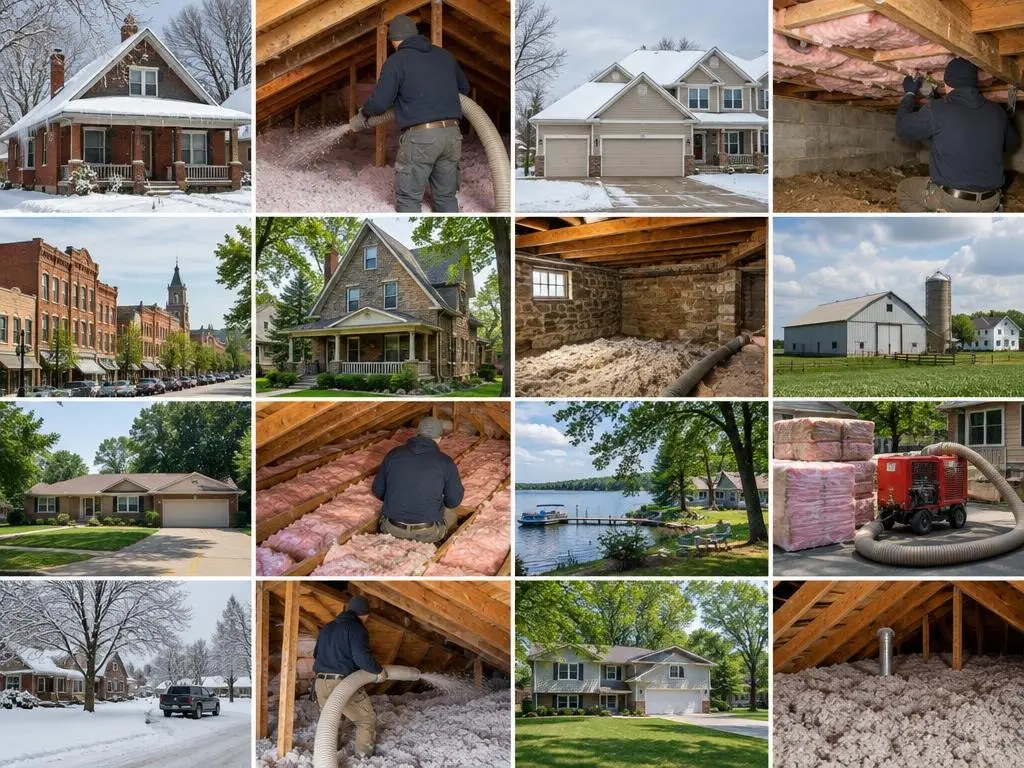
Pre-war houses here usually have uninsulated or partly insulated walls, thin attic fill and stone or block foundations with open rim joists. The fixes: foam the rim, seal and insulate the attic, and dense-pack the walls where they are empty and the wiring checks out.
2000s additions to town
About 17% of Williamston's housing was built from 2000 to 2009. These homes need smaller jobs: foaming rim joists, topping up attics and fixing cold rooms over garages.
Near the Red Cedar
The Red Cedar River passes just north of the center of town. Low-lying basements can be damp, so we check moisture before insulating foundation walls.
Farm and acreage properties
Outside town, Williamstown Township has farmhouses, pole barns and shops. Farmhouses that have been added onto over the years usually need each section handled separately: the original house, any additions, and enclosed porches or mudrooms.
When to insulate
Attic and basement work can be done any time of year. Spray foam in an unheated space in deep winter may need temporary heat to bring surfaces up to the product's minimum temperature, which we include in the quote.
A typical Williamston sequence
In a pre-war Williamston house we usually start in the basement, foaming the rim joist and sealing where plumbing and wiring pass through the floor. Next is the attic: sealing the top plates, chimney and vent stack, then blowing cellulose to R-49 or more. Walls come last, and only if a test hole shows empty cavities. Splitting it this way lets you spread the cost over two seasons if you want.
Owners and renters
About two-thirds of Williamston's occupied homes are owner-occupied. The city's 1,821 housing units had a 7.5% vacancy rate in 2020. Get a free estimate
Williamston Facts
- Housing age. 17.4% of Williamston's homes date from 1939 or earlier and 7.8% from the 1940s; 16.7% were built from 2000 to 2009 (2019-2023 ACS via Point2).
- Housing. The 2020 census counted 1,821 housing units, 7.5% vacant (Wikipedia).
- History. Williamston was platted in 1845, incorporated as a village in 1871 and as a city in 1945, on the Red Cedar River (Wikipedia).
- Climate zone. Ingham County is in Climate Zone 5A (OpenEI).
Williamston Questions
Is spray foam or blown-in better for my old Williamston attic?
Usually both: foam to seal the gaps in the attic floor, then blown-in cellulose to bring it to depth. Full foam on the roof deck is for attics with ducts or no usable floor.
My house has a stone foundation. Can the rim joist be foamed?
Yes. Closed-cell foam seals the uneven gaps between the stone and the sill. We look for water first.
Do you work outside the city limits?
Yes. We work in Williamstown Township and the surrounding rural area, including pole barns and shops.
How long do I need to stay out after spraying?
Plan on staying out of the spray area during the work and for about 24 hours after, or longer if the product calls for it. We ventilate and tell you when it is safe.
What does a rim joist job cost?
National guides put rim joist spray foam at about $2,000 to $2,500. Your price depends on the linear feet and access.
Free Estimates in Williamston, MI
Williamston homeowners: get a free written estimate.
Spray Foam Insulation Near Williamston
- Spray Foam Insulation in Lansing, MI
- Spray Foam Insulation in East Lansing, MI
- Spray Foam Insulation in Okemos, MI
- Spray Foam Insulation in Haslett, MI
- Spray Foam Insulation in Holt, MI
- Spray Foam Insulation in Delta Township, MI
- Spray Foam Insulation in Mason, MI
- Spray Foam Insulation in DeWitt, MI
- Spray Foam Insulation in Grand Ledge, MI
- Spray Foam Insulation in Bath Township, MI
- Spray Foam Insulation in Dimondale, MI
- Spray Foam Insulation in Charlotte, MI
- Spray Foam Insulation in St. Johns, MI
- Spray Foam Insulation in Eaton Rapids, MI
- Spray Foam Insulation in Laingsburg, MI
- Spray Foam Insulation in Perry, MI
- Spray Foam Insulation in Portland, MI
- Spray Foam Insulation in Owosso, MI